Bio-coal
Why bio-coal?
Driven by Green House Gas policies, substitution of fossil energy by sustainable energy is taking place around the world. Wind and solar energy are taking the lead in this transformation, with energy efficiency and biomass catching up quickly.
Early in the industrial revolution wood was used for heat, power and even steel production. Very quickly, coal replaced wood, as it has higher energy density. This allowed for much faster economic growth, especially around coal-rich areas. Later, oil and gas allowed for even greater economic growth. In underdeveloped countries, wood and biomass still make up a very important part of the energy mix, however with a dramatic negative environmental and social impact due to the scale and inefficiency of utilisation.
Recently, the forestry industry in US and Nordic countries saw opportunities in the renewable energy sector to expand their activities to e.g. wood pellets/chips as a fuel substitute.
Alternatively, small (inefficient) dedicated biomass boilers se non-processed forestry products collected in the vicinity (100 km), insofar as transport costs do not undermine the overall financial viability of the operation. These new markets allow the industry to benefit from high margins due to subsidies and obligation schemes in place in some countries.
The current biomass market, which was initially developed by and for the forestry industry, is based on high subsidies paid to the end-consumers, covering the high cost of wood. However, as these incentives will end by 2030, cheaper biomass products and more specifically agricultural residues (which are abundant and often represent a burden in the production of agricultural products), will replace wood.
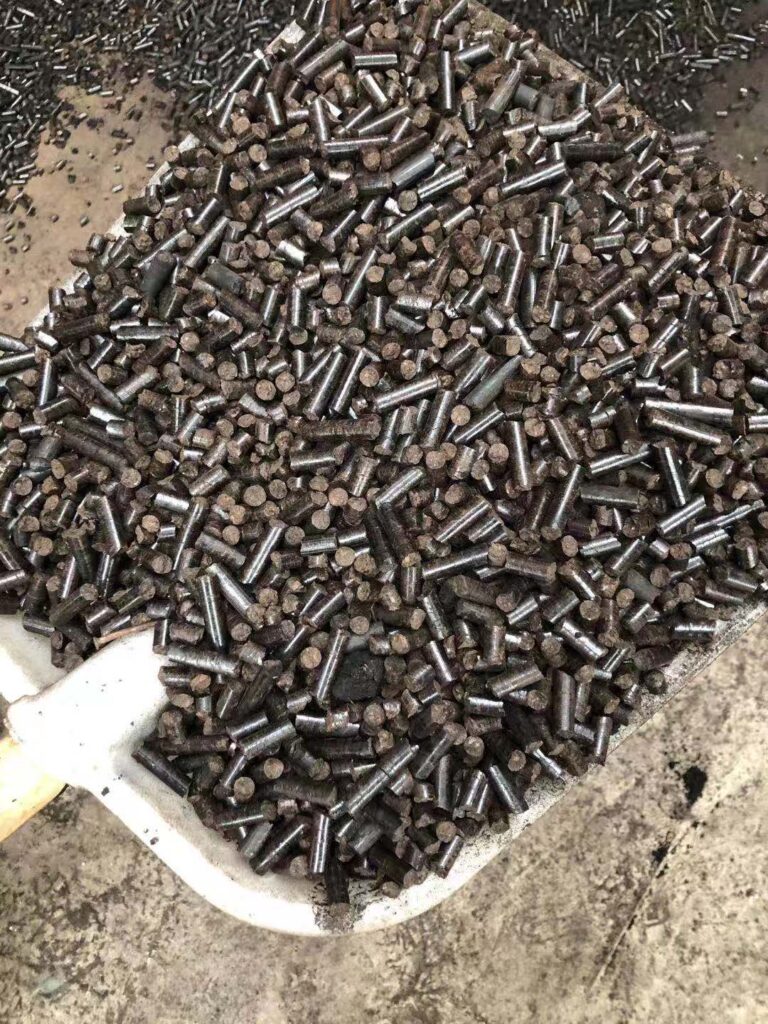
Palm oil and sugarcane residues converted to “bio-coal” are, for reasons of availability and technical specifications, the best candidates to replace wood biomass products in the short term as the production (mill integrated) costs of “bio-coal” pellets are low, and can even compete with fossil coal once coalification technologies are mature and upscale.

Bio-coal produced from Palm Oil residues has proved to be of high quality as regards strength of pellets (lack of dust), calorific value, durability and cleanliness (no corrosive elements), and therefore has a high market value.
The “bio-coal” pellets are an ideal substitute for coal, as they do not require any investment in coal furnaces. Additionally, the substitution increases the overall efficiency of combustion as (1) lower air excess is required, (2) grinding cost (for powder burners) is very low, (3) no desulphurisation of fumes is needed, and (4) ashes are a feedstock for fertilisation.
Mill integrated torrefaction is the most effective way to produce “bio-coal”, as it reduces transport cost of residues, and as all utilities needed for the torrefaction are available.
Compared to traditional treatment/usage of residues, sales of “bio-coal” will create an important additional financial income for the mill.